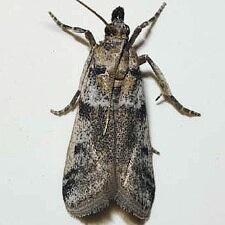
Monday, September 12, 2011

SJ Valley Cotton Growers Are Gearing Up for the Harvest


More than 30 growers and PCAs attended our Cotton Field Day last week.
Growers check out the progress of the Pima cotton during our field day.
Around the Valley’s cotton fields, there’s excitement in the air. Growers are both eager and anxious about the upcoming harvest.
That was the buzz among the 31 growers, pest control advisors and county ag officials attending our Cotton Production and Pest Management Field Day last week at the McCurdy Farm south of Firebaugh. We had a great turnout and learned a lot from University of California Cooperative Extension cotton specialist Dan Munk.
Dan Munk, left, chats with local grower.
Here are some of Dan’s observations about the cotton season so far:
 Most growers this year are concerned about the lateness of this year's crop. This season we saw very late planting conditions and a cool post-emergence period that caused a delay in vegetative growth and more importantly a delay in the date of first flower, a growth measure linked to yield. Because of the cool spring conditions, most fields in the area did not begin to bloom until after July 4 with some fields reporting average first bloom in mid-July. This is a particular problem for the Pima crop since it requires an additional two weeks to produce effective bloom than upland cotton types. We want to try to mature as many late season bolls as possible and we want the plant to be in cut-out while there are enough heat units to mature the boll properly. However, in some fields, we are not going to have an opportunity to harvest everything the plant produces this year because of the delayed crop development.
In terms of pest management pressure, there has been both good and bad during the season. We have had some mixed results. But generally speaking we’re going to expect average yields to above average yields, which is really not expected for a year with such a late start. Growers generally have done a very good job of managing their fields to ensure maximum yields.
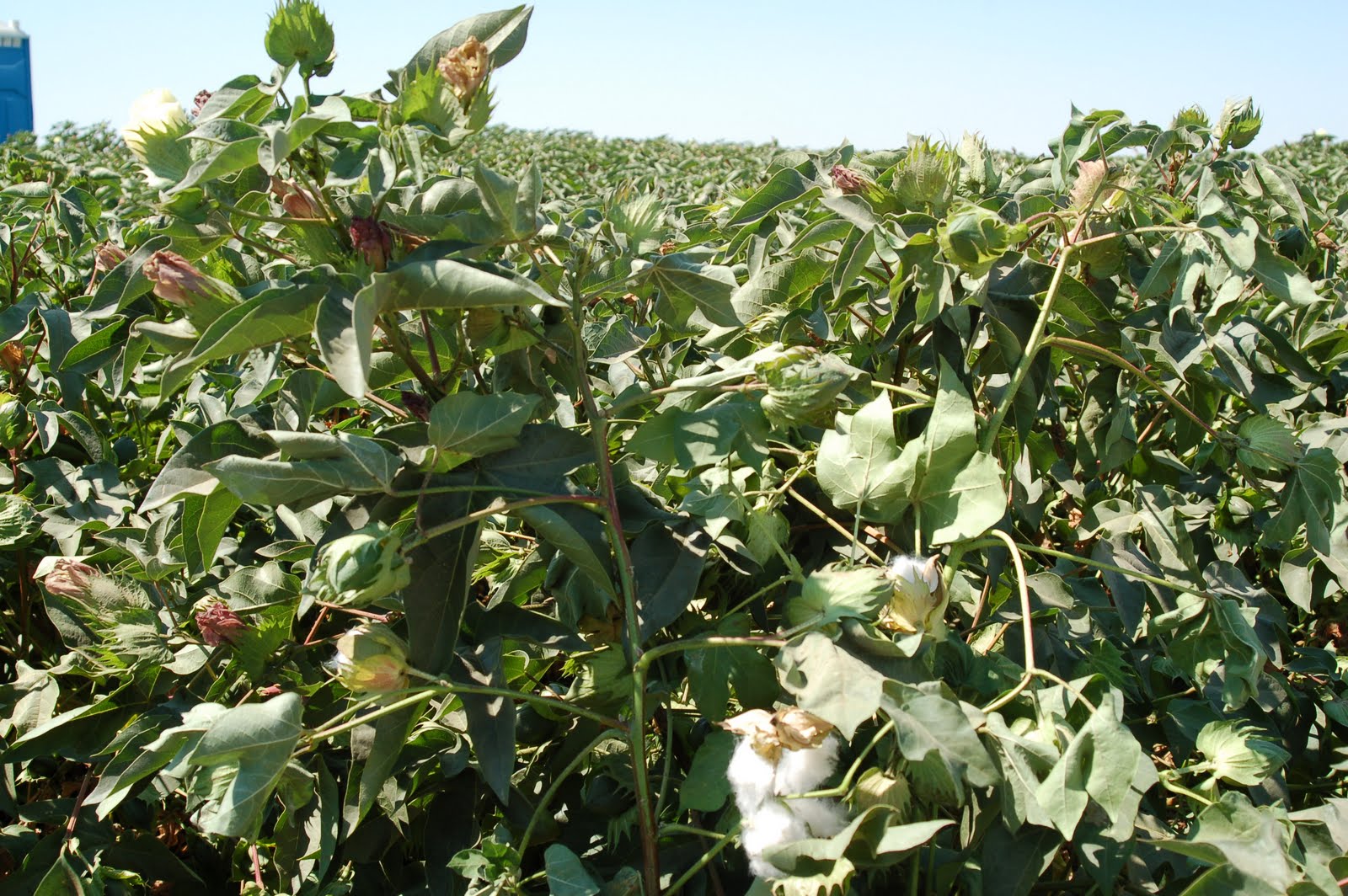
Pima cotton field at the McCurdy Farm.
With irrigations terminated, it’s time to begin thinking about the harvest. We want to do that in a timely manner so we allow as many bolls as possible to open up. That means monitoring nodes above cracked boll and applying the right materials at the right time to have an effective defoliation.
From the discussions at the meeting, many growers are looking forward to a good harvest and the discussion about harvest aid timing was particularly useful.
(For more information about cotton defoliation schedule, check the UC Statewide Integrated Pest Management website.)  Thanks again to Dan Munk for taking time to meet with growers and answer their questions. 

Tuesday, September 6, 2011

Aphid and Whitefly Infestations Lead to Sticky Problems

It’s a safe bet you’ll find lots of folks enjoying some sticky cotton candy at next month’s Big Fresno Fair. Valley cotton growers certainly hope that’s the only place you’ll find any kind of sticky cotton.
With the last irrigation complete, we’re now at cut-out – the last stage of cotton plant development before the bolls start to open. Our attention focuses on cracked bolls and insects, especially aphids and whiteflies.
Sticky cotton impacts the fiber quality.
In late summer and fall, aphids and whiteflies are the major pests in cotton. This season, I’m seeing more whiteflies than normal in the fields. These pests secrete sugary honeydew on the cotton plant, which can contaminate an open boll. A sooty mold growth on the fiber creates sticky cotton.
The late-season insects can cause damage in the lint as it goes through the gin as sticky cotton. Sticky cotton affects the quality of the fiber and results in a markdown in grade, costing growers money in the long run.
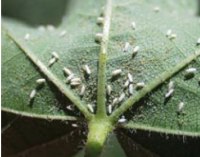
Whiteflies found under the leaf.
To prevent an infestation, you need to monitor their fields for these pests. Divide your field into four different parts. Pull 20 to 25 leaves from each section, giving you a total of 80 to 100 leaves for the entire field. Then inspect the back of each leaf for aphids and whiteflies.
Check the University of California Statewide Integrated Pest Management website for monitoring guidelines and treatment thresholds for aphids and whiteflies in cotton.
Monitor plants for aphid problems.
- UC IPM photo
If you need to treat for these pests, remember to ask your PCA about softer materials that won’t harm beneficial insects. Using stronger materials could open up a Pandora’s Box to other problems in the future.
Right now, mites and worms aren’t a major concern. Still growers need to keep an eye out for potential problems with worms that can damage young bolls.
Have any questions about pests and the upcoming harvest? Get your answers at our Cotton Production and Pest Management Field Day on Wednesday. It will be from 10 to 11:30 a.m. at the McCurdy Farm, south of Firebaugh. UC Cooperative Extension cotton specialist Dan Munk will provide lots of valuable tips about timely cotton termination and more advice about avoiding sticky cotton. I will be there to give a field scouting update. Check our Sustainable Cotton Project website for directions. You also can earn 1.5 hours of continuing education credits. See you there.


Monday, August 29, 2011

Ant Damage Risk Rises Longer Almonds Are Left on Ground


Editor’s note: We welcome again our guest blogger UC IPM entomologist Walt Bentley, whose specialty includes managing pests in almonds.

Nonpareil almonds are now being removed from trees in Fresno and Madera counties. Many of these orchards are beginning to windrow the nuts and will be delivering the first loads to the huller within a day or two. 

This is good news in terms of Navel orangeworm and peach twig borer infestation.  It is also good news in terms of ant damage. For Nonpareils and other soft shell varieties, the shorter time the nuts are on the ground, the less ant damage.

Remove almonds from the orchard floor once they are sufficiently dried.
However, ants can still be a problem if nuts are left on the orchard floor for too long.  Past research has shown that, depending on ant density, damage can increase by 0.5 percent per day as nuts remain on the ground. Don’t delay in removing nuts from the orchard floor once they are sufficiently dried.

UC IPM photo by Jack Kelly Clark
The high temperatures have aided us in drying the nuts quickly. Such temperatures also reduce the foraging time for ants. Both California fire ants and pavement ants do not forage on nuts when the ground temperature is above 95 degrees. Neither of these species is a problem on hard shell varieties.

We have also seen mites developing in some of the orchards. At this time of year, web spinning mites are not a serious issue. Many farmers and pest control advisors will worry if they are seeing webbing but the crop has developed and the impact of leaf feeding is very minor.

Many believe early defoliation will impact next year’s nut set. This impact has been tested and shown to be untrue.  So, be patient and don’t worry about the spider mites now. We are close to the final leg of the race and we are in a good position for a clean harvest. 
Walt Bentley is a long-time entomologist with the University of California Statewide Integrated Pest Management program at the Kearney Ag Center in Parlier.
 

Cotton Field Day Reminder: Don’t forget to remind your colleagues in the cotton business about our upcoming Cotton Production and Pest Management Field Day. It will be Sept. 7 from 10 to 11:30 a.m. at the McCurdy Farm, south of Firebaugh. UC Cooperative Extension cotton specialist Dan Munk will give important tips about timely cotton termination and pest management practices to avoid sticky cotton. I will give a field scouting update. Check our Sustainable Cotton Project website for directions.  The event offers 1.5 hours of continuing education credits. It’s a perfect opportunity to have your questions answered.

Monday, August 22, 2011

Putting Together a Solid Off Season Game Plan for Alfalfa


In the Bay Area, the Oakland Raiders and San Francisco 49ers will be make their final roster cuts over the next few weeks. In the San Joaquin Valley, alfalfa growers also will be making their last cut of the season.

Soon it will be the off season for alfalfa growers and just like pro football coaches they need to set up a solid a game plan for the fall and winter months. You need to tackle potential pest, weed and disease issues to avoid problems with next year’s crop. So fall and winter sanitation for insects and weeds is important. The University of California Statewide Integrated Pest Management program offers tips for a successful year-round IPM program for alfalfa, including activities for the fall and winter months.

Alfalfa weevils are potential threats.
                     - Jack Kelly Clark photo
 Over-wintering aphids tend to carry viruses into the following year. You also need to monitor for alfalfa and Egyptian alfalfa weevils, which can chew up the leaves.

Fiddleneck weeds emerge in a field.
 - Jack Kelly Clark photo
Soon after the last cut, growers should start surveying the fields for weeds, which start to germinate in late September and October and continue growing through January. Use the UC IPM monitoring forms for weevils (70.2 kb, pdf), aphids (107kb, pdf) and weeds (116.4 kb, pdf) to help you with your record keeping.

Remember, the post-harvest season still means growers need to head to the field with their sweep nets every two or three weeks to check for pests. You should do 25 sweeps each in four different sections of the field. Stick to your game plan and you’ll be ready to kick off your next growing season on a good footing.

Cotton Field Day: We finally worked out the details of our Cotton Production and Pest Management Field Day. It will be Sept. 7 from 10 to 11:30 a.m. at the McCurdy Farm, south of Firebaugh. UC Cooperative Extension cotton specialist Dan Munk will give important tips about timely cotton termination and pest management practices to avoid sticky cotton. I will give a field scouting update. Check our Sustainable Cotton Project website for directions. We’ve applied for 1.5 hours of continuing education credits. It should be an informative meeting as we head toward the cotton harvest.


Monday, August 15, 2011

Valley Cotton Growers Are Preparing for Last Irrigation

After another weird weather year, we’re finally heading down the backstretch of the cotton-growing season.

Growers are counting the days before they cut off irrigation and get their crops ready for harvest. Typically, the last irrigation comes between Aug. 20 and Aug. 25. Before you know it, the fields will be alive with the click-clacking sounds of the harvesters working the fields.

Right now, I’m still seeing lygus treatment applied around the around the Valley. Growers are concerned about retention and plant stands.

In the acala varieties, there should be five to six nodes above white flower. With water cut-off around the corner, growers expect that 20 percent of the crop above white flower will make it by harvest time. Growers should be cautious about scheduling any late-season treatment for lygus. It may not be worth the extra expense. The University of California Statewide Integrated Pest Management program offers a publication discussing nodes above white flower measurements for determining when to stop monitoring for lygus.
 
I want to re-emphasize the importance of going into the fields to inspect plant development, monitor pests and determine when to schedule the last irrigation.

Overall, the cotton plants I am seeing have up to 73 to 76 percent retention. Lygus pressure has been higher this season, but treatment has been effective to control potential plant damage.

I’m finding late-season mite damage, which was virtually non-existent in the past couple of years. These pests are migrating from almond orchards being harvested or dusty roads that are not being sprayed with water to control dust. If there are mite problems, growers should consider adding some miticides to their other treatment. Aphid issues are occurring in areas near harvested tomato and cantaloupe fields.

Field Day Alert: Our next cotton field day will be coming up in early September. University of California extension advisors and IPM specialists will be among the experts discussing defoliation and other harvest-related topics. I will pass along more information after we work out the final details.


Friday, August 5, 2011

Cutting Off the Water to Prepare for Harvest


Editor’s note: We are featuring a guest blog by UC IPM entomologist Walt Bentley, whose specialty includes managing pests in almonds.

Navel orangeworm egg deposition has dropped as of Wednesday, Aug. 3. I expect that to continue for at least another week.

This drop signals the end of second-generation egg laying by NOW moths. This second generation NOW eggs usually result in very minimal infestation. I have seldom seen over 2 percent infestation resulting from worms hatched from these eggs. Additionally, these hatched worms or larvae are the ones that our hullsplit spray targets.

In talking with the almond farmers in the project, the timing of that spray for Nonpareils was excellent. What we must now focus on is the harvest before the third generation eggs are laid. The third generation is the one that can result in substantial damage and, if you have your Nonpareils on the ground before these eggs are laid, you will avoid NOW infestation.

I recognize many of you have a number of acres to harvest. Some of you don’t have harvest equipment and must rely on others to come in and shake the almonds. If you have Nonpareils, try to arrange for harvest as soon as you can. This means timely cut off of water. Remember the impact that late irrigation has on the development of hullrot. Those with higher density plantings are particularly susceptible.

So focus on getting the water off and preparing for Nonpareil harvest. If there are orchards that have had more problems than others in the past, schedule them first for harvest.

Finally, make sure you take some samples from the nuts that are on the ground. You can collect 500 to 1,000 from each orchard, throw them in the freezer and crack them out when you have time later. This will give you an idea of what infestation or disease issues are present in your orchard. Good luck on this year’s harvest.
Walt Bentley is a long-time entomologist with the University of California Statewide Integrated Pest Management program at the Kearney Ag Center in Parlier.


Monday, August 1, 2011

Setting the Final Stage for Developing Cotton Fruit

We’re almost halfway through summer and farms across the Valley are bustling with activity. As I travel around the fields, I see tomatoes being harvested, safflower drying nicely and cotton plants are almost finished setting their fruit.

The cotton plants are showing an average of 75 to 80 percent fruit retention with about 12 to 13 fruiting branches (some fields have 11 to 12 fruiting branches). The retention rate is very good, which is a credit to the work of growers and pest control advisors. You can refer to the University of California Statewide IPM web site for information about monitoring cotton plant growth.

Right now, cotton is about two weeks away from cut-out, which is the final stage of plant growth before the bolls start to open. As we head into hot August nights, I am telling growers to remember their WIGs. That’s short for:

  • Water management. A lot of growers have completed their third or fourth irrigation. Some might want to cut off irrigation to push the plants to cut-out. However, there’s still time to get more fruit so continue reviewing your water management strategy to maximize fruit development.
  • Insects. Lygus counts continue to increase in the cotton fields. In one field, I collected more than 50 adults and 50 nymphs in 25 passes of my sweep net. That’s high. The lygus are migrating from neighboring alfalfa and safflower fields. Remember to leave uncut strips of alfalfa to provide a home for lygus. You can treat for lygus in the safflower and alfalfa. Consider this: It’s more economic to treat five acres of an alfalfa strip than 150 acres of cotton.
  • Growth regulators. Some growers might consider using a growth regulator product to enhance plant production such as boll and closed canopy development. Be aware a cooler than normal fall may make it difficult for late bolls to mature. It’s up to you to decide if you are willing to roll the dice, spend the money on regulators and go after late season bolls.

 It's still important to leave alfalfa strips to manage lygus.