Monday, October 10, 2011

Rain Leaves Cleaner Cotton Plants as Growers Prepare for Harvest


The sun is shining. And Indian summer is back in the Northern San Joaquin Valley with high temperatures heading back into the 80s for the rest of this week.

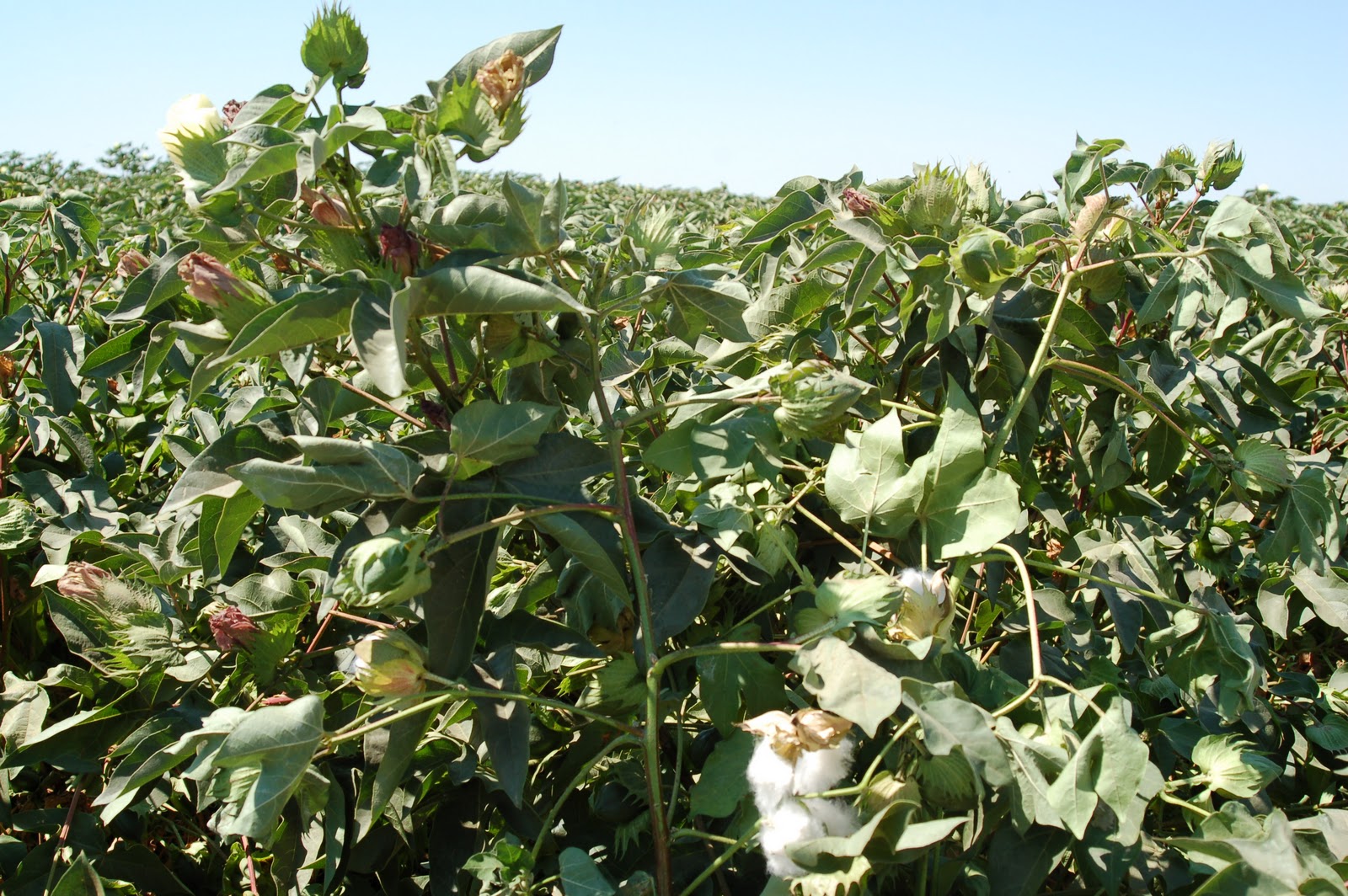
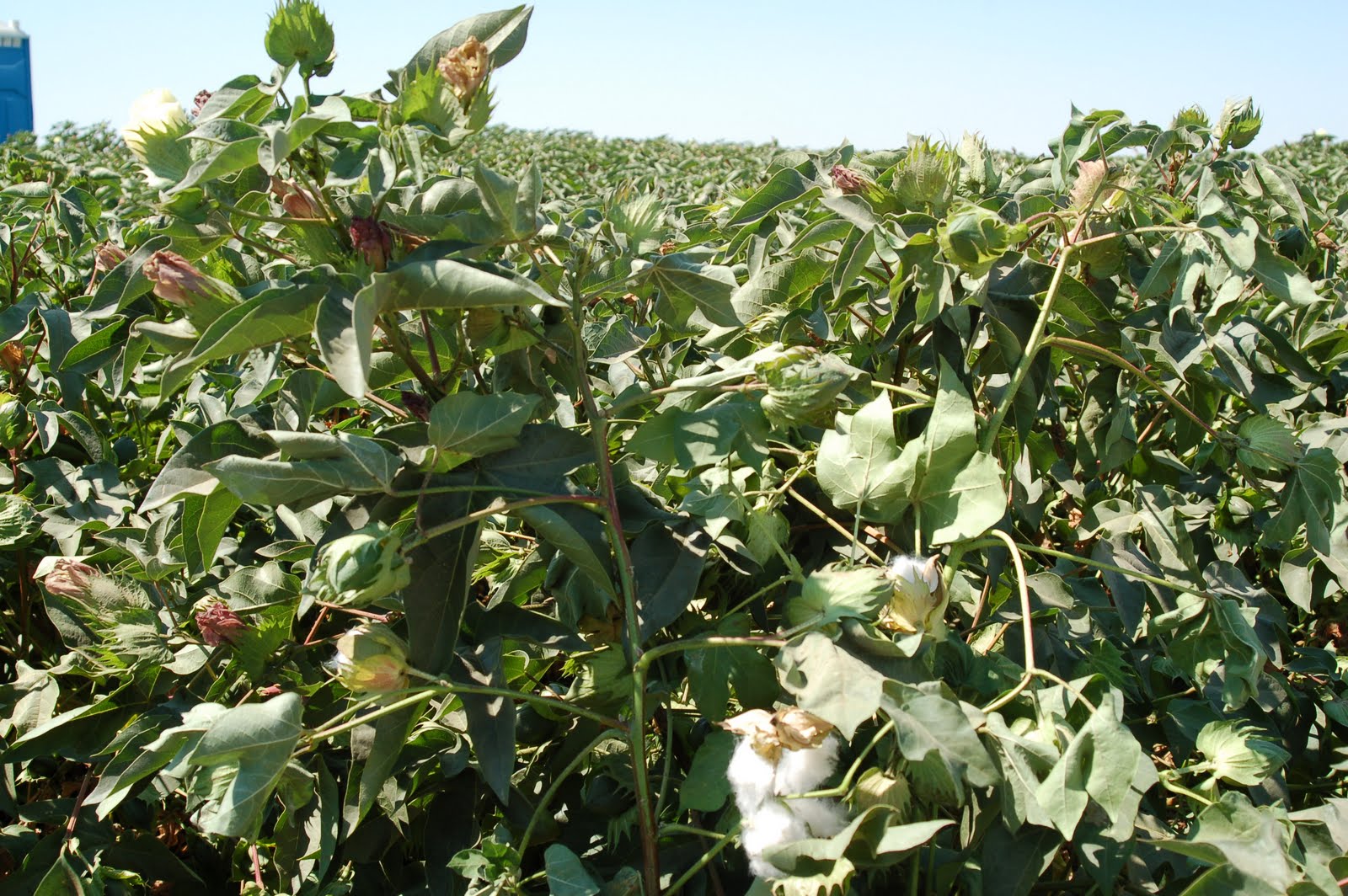
October sure started off with a storm. We had up to 1 inch of rain around the region. On the plus side to cotton growers, the rain helped wash off any dust or sticky honeydew on the plants. Right now, growers don’t expect to have any mold or mildew problems with the fiber.

Kevin Long of Olam Cotton in Fresno tells us that he doesn’t think any fiber quality issues will develop because of the rain. “The sun was out after the rains and additionally there was a nice wind blowing afterwards that would help dry the cotton out. There is a smaller percentage of cotton exposed to the rain now vs. what will be open and exposed three weeks from now.”
Last week's rain across the Valley left fields muddy.

The rain did interrupt work in the cotton fields last week. Now, everything is buzzing again.  Acala growers are ready to harvest their crop and Pima farmers are moving ahead with defoliation.  Around our area, many growers should start picking Acala around mid-week.

As I traveled around Friday, the fields were too muddy for any ground application of defoliants. I saw some planes making aerial applications as growers rushed to take advantage of the warmer weekend weather.

With the later-developing Pima varieties, I expect growers to start defoliating sometime this week. If Mother Nature cooperates, look for the Pima harvest to start the first week of November.

Buses  will shuttle dozens of Cotton Tour participants
directly to the field to meet and talk with cotton growers.


Cotton Tour Coming Up: Here’s another reminder about our annual Cotton Tour on Tuesday, November 8. There’s still room available for the free event, which includes a tasty lunch in downtown Firebaugh. Participants will have an opportunity to meet growers, visit a gin and even pick some cotton. Buses will leave the Best Western Apricot Inn – Interstate 5 and West Panoche Road about 23 miles southwest of Firebaugh – at 8:30 a.m. and return about 4 p.m. Registration is required. Sign up at http://www.surveymonkey.com/s/RQG9P3G


Thursday, October 6, 2011

Cotton Experts Weigh in on Early Fall Rain in the Valley

Because of the unseasonably cool weather and early fall rain swooping into the San Joaquin Valley this week, we are publishing a special post updating growers about the weather's impact on this year's cotton crop. We thank two leading California cotton experts for providing their perspectives and tips.

Dr. Pete Goodell, University of California Statewide Integrated Pest Management advisor, Kearney Ag Center: Westside Fresno and Merced counties received between 0.35 inches at the UC West Side Research and Extension Center in Five Points and 1.28 inches in Los Banos.
Dr. Pete Goodell

In general, a half inch is considered good for cleaning dust, dirt and honeydew off plants. However, if cotton is still green with defoliation weeks away, rainfall could wash more dirt and honeydew onto lint.

If defoliation has occurred, this will affect efficacy due to lower temperatures. It might also cause some re-greening as plants receive some limited moisture. If defoliation and harvest is still a ways off, it might have no effect.

The bottom line: It all depends on location, amount of rainfall and condition/maturity of crop.

Bob Hutmacher, UC statewide cotton specialist: Lower temperatures and the start of rain bring some challenges to getting this cotton crop harvested and out of the field.

Bob Hutmacher
Lower temperatures slow the rate of maturation of later developing bolls, making it harder to get them open and ready for harvest. The cooler weather also means that chemicals like Ginstar don’t work quite as well as harvest aids. As a result, you may need to consider higher application rates at lower temperatures (such as with Ginstar), or if temperatures drop well below 80 degrees, you may do better by changing to different harvest aids (defoliation/prep combination, for instance) that work better at lower temperatures.

Rain is always a threat as we prepare for harvest. In some cotton varieties, cotton is held relatively “loose” in the boll and the added weight of rain can cause the cotton to “string out” even more than would otherwise occur. This brings the real threat of cotton dropping to the ground instead of hanging on the plant waiting for the picker. Fields usually hold up pretty well through the first rain, but repeated rains can result in some significant losses, particularly those varieties with loosely held cotton and fully mature bolls (such as some of the Acalas). Try to stage harvests to get the worst-affected fields harvested first, before losses can become more severe.

Storm clouds hover over Firebaugh area Thursday morning.
To be harvestable, some of the really late-developing cotton bolls need some additional heat units to fully mature and be ready to open up as we apply harvest aids. If there are too few heat units for the really late bolls, such as some of the late bolls in the upper canopy on Pima plants this year, it is unlikely that those can be opened for harvest no matter what combination of harvest aid chemicals are used.

In many parts of the San Joaquin Valley this year, particularly in Pima fields, there may be more second-picking of cotton fields, as the growers get the first picks out of the way during better weather and then see if a second pick might be a possibility for later maturing bolls.

Monday, October 3, 2011

Cooler Weather Puts Pima Defoliation in Holding Pattern


Ominous rain clouds hover over the California Aqueduct.

When it comes to farming there’s one prediction that’s sure to come true: Unpredictable weather.
That’s certainly the case for cotton growers.

First rain and cool weather pushed back spring plantings. Now, Mother Nature is at it again in early fall. Unseasonal cool daytime high temperatures and the chance of rain in the coming days have put prepping and defoliation plans on hold for pima cotton growers. (Acala bolls develop faster so growers don’t have to do prep work. They started defoliating last week).
Rain will impact work in cotton fields.
Pima growers will prep their plants with materials (boll openers) to enhance boll development before applying defoliants. You want plants to have at least 50 to 65 percent of the bolls open. 

 However, growers are in a holding pattern because any significant rainfall could wash away some material and force growers to spend more money on re-application. Moreover, daytime temperatures need to be above 80 degrees for several days to ensure proper defoliation. The forecast calls for highs in the 70s through Friday. Historically, Valley daytime highs hover in the 80s during the first couple weeks of October. So we wait. The University of California Statewide Integrated Pest Management website has more information about harvest aid chemicals for cotton.

For the optimists, a little rain could help clean off dust and any honeydew on the plants, which can prevent sticky cotton and a downgrade on fiber quality. If Mother Nature cooperates, we may see some Pima being harvested after Thanksgiving.

Overall, everything is pretty much moving ahead.  Pests aren’t a real concern now. And growers are expecting some good yields this season.
The media learns about cotton cultivation during our annual farm tour conducted at harvest time.
Annual Cotton Tour Reminder: Don’t forget to spread the word about our annual Cotton Tour on Tuesday, November 8. It’s a free event and includes lunch in downtown Firebaugh. Participants will have an opportunity to meet growers, visit a gin 
and even pick some cotton. Buses will leave the Best Western Apricot Inn – Interstate 5 and West Panoche Road about 23 miles southwest of Firebaugh – at 8:30 a.m. and return about 4 p.m. Registration is required. Sign up for the tour at http://www.surveymonkey.com/s/RQG9P3G


Monday, September 26, 2011

Better Late Than Never: It's Time for Cotton Defoliation


Finally… Westside growers are ready to start defoliating their cotton plants in preparation for the fall harvest.

It’s been an anxious time for growers. The defoliation timetable is about a week to 12 days later than normal compared to the 30-year average – thanks to the wet spring which delayed planting. Usually, growers start applying defoliants around Sept. 15 to 20 – just as the summer winds down. Well, it’s now fall and growers will finally start this week.

Westsiders have seen their fellow cotton growers in the southern San Joaquin Valley – from Five Points south – already start defoliating their pima and acala crops. Dos Palos growers began last week on their acala.
This year, growers are trying to maximize yields because of the strong cotton commodity prices. That meant holding off as long as possible with defoliation. If Mother Nature cooperates, the wait should pay off. We could see growers achieving an average yield increase of 5 to 8 percent this season. Proper defoliation requires temperatures for several days to be above 80 degrees during in the day and more than 50 degrees in the morning.
The University of California Statewide Integrated Pest Management website has more information on scheduling defoliation.

Our YouTube video features UCCE
Fresno Farm Advisor Dan Munk.
You also can view the Sustainable Cotton Project’s short YouTube video featuring University of California Cooperative Extension Farm Advisor Dan Munk, who discusses cotton defoliation. The video was taken during  our Sept. 7 Cotton Field Day.

On the pest front, aphids and white flies have been an issue, especially in cotton fields west of Fairfax. But treatments have been effective in managing these pests.
Cotton Tour participants get a first-hand look on Valley cotton cultivation.
Annual Cotton Tour Alert: Once again, buses carrying consumers, apparel company representatives and textile industry officials will be crisscrossing the Valley during our annual Cotton Tour on Tuesday, November 8. The price is right for the tour – FREE. Participants have the opportunity to meet growers, visit a gin and even pick some cotton. Buses will leave the Best Western Apricot Inn – Interstate 5 and West Panoche Road about 23 miles southwest of Firebaugh – at 8:30 a.m. and return about 4 p.m.  Spread the word to anyone you think is interested in joining us. Registration is required. Sign up at http://www.surveymonkey.com/s/RQG9P3G

Monday, September 19, 2011

Knocking Off Leftover Almonds Can Yield Double Dividends


Walt Bentley
Editor’s note: We welcome again our guest blogger UC IPM entomologist Walt Bentley, whose specialty includes managing pests in almonds.

We are collecting almond nut samples from the orchards to check for damage. To date, the damage is quite low.

Damage has been low this season.
I want to remind farmers that they should be evaluating 200 to 300 nuts throughout the orchard. Then they should compare the samples with the information received from the processor.


Worker uses pole  to knock
off remaining nuts in tree.
- Jack Kelly Clark photo
As a rule, trees should have two or fewer mummy nuts per tree by February 1. You can go to the UC IPM website for more information about pest management guidelines for NOW.

 Lack of good mummy nut removal last year was quite evident in many of the west side orchards.  This needs to be a priority if NOW is to be kept at manageable levels. It will pay off in the long run.

Walt Bentley is a long-time entomologist with the University of California Statewide Integrated Pest Management program at the Kearney Ag Center in Parlier.


Monday, September 12, 2011

SJ Valley Cotton Growers Are Gearing Up for the Harvest


More than 30 growers and PCAs attended our Cotton Field Day last week.
Growers check out the progress of the Pima cotton during our field day.
Around the Valley’s cotton fields, there’s excitement in the air. Growers are both eager and anxious about the upcoming harvest.
That was the buzz among the 31 growers, pest control advisors and county ag officials attending our Cotton Production and Pest Management Field Day last week at the McCurdy Farm south of Firebaugh. We had a great turnout and learned a lot from University of California Cooperative Extension cotton specialist Dan Munk.
Dan Munk, left, chats with local grower.
Here are some of Dan’s observations about the cotton season so far:
 Most growers this year are concerned about the lateness of this year's crop. This season we saw very late planting conditions and a cool post-emergence period that caused a delay in vegetative growth and more importantly a delay in the date of first flower, a growth measure linked to yield. Because of the cool spring conditions, most fields in the area did not begin to bloom until after July 4 with some fields reporting average first bloom in mid-July. This is a particular problem for the Pima crop since it requires an additional two weeks to produce effective bloom than upland cotton types. We want to try to mature as many late season bolls as possible and we want the plant to be in cut-out while there are enough heat units to mature the boll properly. However, in some fields, we are not going to have an opportunity to harvest everything the plant produces this year because of the delayed crop development.
In terms of pest management pressure, there has been both good and bad during the season. We have had some mixed results. But generally speaking we’re going to expect average yields to above average yields, which is really not expected for a year with such a late start. Growers generally have done a very good job of managing their fields to ensure maximum yields.
Pima cotton field at the McCurdy Farm.
With irrigations terminated, it’s time to begin thinking about the harvest. We want to do that in a timely manner so we allow as many bolls as possible to open up. That means monitoring nodes above cracked boll and applying the right materials at the right time to have an effective defoliation.
From the discussions at the meeting, many growers are looking forward to a good harvest and the discussion about harvest aid timing was particularly useful.
(For more information about cotton defoliation schedule, check the UC Statewide Integrated Pest Management website.)  Thanks again to Dan Munk for taking time to meet with growers and answer their questions. 

Tuesday, September 6, 2011

Aphid and Whitefly Infestations Lead to Sticky Problems

It’s a safe bet you’ll find lots of folks enjoying some sticky cotton candy at next month’s Big Fresno Fair. Valley cotton growers certainly hope that’s the only place you’ll find any kind of sticky cotton.
With the last irrigation complete, we’re now at cut-out – the last stage of cotton plant development before the bolls start to open. Our attention focuses on cracked bolls and insects, especially aphids and whiteflies.
Sticky cotton impacts the fiber quality.
In late summer and fall, aphids and whiteflies are the major pests in cotton. This season, I’m seeing more whiteflies than normal in the fields. These pests secrete sugary honeydew on the cotton plant, which can contaminate an open boll. A sooty mold growth on the fiber creates sticky cotton.
The late-season insects can cause damage in the lint as it goes through the gin as sticky cotton. Sticky cotton affects the quality of the fiber and results in a markdown in grade, costing growers money in the long run.
Whiteflies found under the leaf.
To prevent an infestation, you need to monitor their fields for these pests. Divide your field into four different parts. Pull 20 to 25 leaves from each section, giving you a total of 80 to 100 leaves for the entire field. Then inspect the back of each leaf for aphids and whiteflies.
Check the University of California Statewide Integrated Pest Management website for monitoring guidelines and treatment thresholds for aphids and whiteflies in cotton.
Monitor plants for aphid problems.
- UC IPM photo
If you need to treat for these pests, remember to ask your PCA about softer materials that won’t harm beneficial insects. Using stronger materials could open up a Pandora’s Box to other problems in the future.
Right now, mites and worms aren’t a major concern. Still growers need to keep an eye out for potential problems with worms that can damage young bolls.
Have any questions about pests and the upcoming harvest? Get your answers at our Cotton Production and Pest Management Field Day on Wednesday. It will be from 10 to 11:30 a.m. at the McCurdy Farm, south of Firebaugh. UC Cooperative Extension cotton specialist Dan Munk will provide lots of valuable tips about timely cotton termination and more advice about avoiding sticky cotton. I will be there to give a field scouting update. Check our Sustainable Cotton Project website for directions. You also can earn 1.5 hours of continuing education credits. See you there.